

—
- 🚀 Blast‑Off: Why Rocket Tech Matters More Than Ever
- 1. Propulsion Systems: From Chemical Rockets to Hybrid Innovations
- 1.1. Chemical Propulsion – The Workhorse
- 1.2. Electric & Hybrid Propulsion – The Efficiency Boost
- 1.3. Emerging Propellants – Methane and Beyond
- 2. Reusability: Turning Rockets into Aircraft
- 3. Materials & Manufacturing: Building Stronger, Lighter Rockets
- 3.1. Advanced Composites
- 3.2. Additive Manufacturing (3D Printing)
- 3.3. Thermal Protection Systems (TPS)
- 4. Satellite Deployment & Mission Architecture
- 5. The Future Landscape: What’s Next for Rocket Tech?
- Conclusion – Key Takeaways
🚀 Blast‑Off: Why Rocket Tech Matters More Than Ever
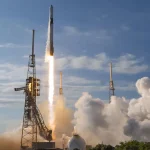
Imagine watching a sleek, stainless‑steel rocket roar skyward, shedding its first stage like a spent shell and then gracefully returning to land on a floating drone ship. That spectacular sight isn’t just a cinematic stunt—it’s the cutting edge of rocket technology that is redefining how humanity reaches orbit, delivers satellites, and even plans for missions to Mars.
In the past decade, breakthroughs in propulsion, materials, and reusability have turned space from a domain reserved for super‑power governments into a bustling commercial arena. Whether you’re an engineering student, a startup founder, or a space‑enthusiast looking to understand the nuts and bolts, this guide breaks down the most actionable aspects of modern rocket tech so you can stay ahead of the curve.
—
1. Propulsion Systems: From Chemical Rockets to Hybrid Innovations
1.1. Chemical Propulsion – The Workhorse
The majority of launches still rely on chemical rocket engines that burn liquid or solid propellants. The classic combination—liquid oxygen (LOX) and kerosene (RP‑1) for first stages, or LOX and liquid hydrogen for upper stages—offers high thrust-to-weight ratios essential for escaping Earth’s gravity.
Actionable tip: If you’re designing a small satellite launch vehicle, consider a LOX/RP‑1 engine like the SpaceX Merlin or Rocket Lab’s Rutherford. These engines provide a proven balance of performance, cost, and manufacturing simplicity.
1.2. Electric & Hybrid Propulsion – The Efficiency Boost
Electric propulsion (ion thrusters, Hall‑effect thrusters) and hybrid engines (solid fuel with liquid oxidizer) are gaining traction for in‑space maneuvers and small‑payload missions. While they produce lower thrust, their specific impulse (Isp)—a measure of fuel efficiency—can be ten times higher than traditional chemistry.
Actionable tip: For CubeSat missions requiring long‑duration station‑keeping, integrate a Hall‑effect thruster. Companies like Aerojet Rocketdyne now offer plug‑and‑play modules that fit within a 3U CubeSat form factor.
1.3. Emerging Propellants – Methane and Beyond
Methane‑based engines, such as SpaceX’s Raptor and Blue Origin’s BE‑4, promise cleaner combustion, easier storage, and the potential for in‑situ resource utilization (ISRU) on Mars. Methane can be synthesized from Martian CO₂ and subsurface water, making it a cornerstone for future interplanetary travel.
Actionable tip: When planning a Mars‑bound architecture, factor in methane production rates and storage requirements early. Conduct trade‑studies comparing methane vs. traditional kerosene to assess mass savings and mission flexibility.
—
2. Reusability: Turning Rockets into Aircraft
2.1. First‑Stage Recovery
The game‑changing concept of reusable first stages—pioneered by SpaceX’s Falcon 9—has slashed launch costs by up to 70 % per flight. The key technologies include:
- Grid‑fins and thrust vector control for precise re‑entry guidance.
- Autonomous propulsive landing using engine throttling and real‑time navigation.
- Full‑Stage Reusability: Companies are testing second‑stage recovery, which could further reduce cost per kilogram to orbit.
- Hybrid Air‑Launch Systems: Concepts like Virgin Orbit’s LauncherOne show that air‑launch can provide flexible, low‑cost access to low Earth orbit (LEO).
- AI‑Driven Autonomy: Machine‑learning algorithms are being deployed for real‑time health monitoring of engines, predictive maintenance, and autonomous flight decisions.
Actionable tip: If you’re a launch provider, invest in robust telemetry and autonomous flight software. Simulations using open‑source tools like OpenRocket can help you model descent trajectories before committing to hardware.
2.2. Reusable Fairings and Boosters
Beyond the first stage, fairing recovery (the protective nose cone that shields payloads) is becoming routine. Companies employ parachutes, parafoils, and even ship‑based “catch” nets to retrieve these expensive composite structures.
Actionable tip: Design fairings with integrated GPS beacons and RFID tags. This enables rapid location tracking after splashdown, reducing turnaround time between flights.
2.3. Economic Impact
Reusability doesn’t just cut costs; it accelerates launch cadence. More frequent flights mean faster satellite constellations, quicker data delivery, and a more responsive space infrastructure.
Actionable tip: For satellite operators, negotiate launch contracts that include “flight‑proven” reusable rockets. These often come with performance guarantees and lower price points, making large constellations financially viable.
—
3. Materials & Manufacturing: Building Stronger, Lighter Rockets
3.1. Advanced Composites
Carbon‑fiber reinforced polymers (CFRP) dominate modern rocket structures due to their high strength‑to‑weight ratio. Recent advances in automated fiber placement (AFP) allow for precise lay‑up of complex geometries, reducing part count and assembly time.
Actionable tip: If you’re sourcing a rocket airframe, request material certification data sheets that include tensile strength, modulus, and out‑gassing properties—critical for cryogenic environments.
3.2. Additive Manufacturing (3D Printing)
Metal 3D printing, especially Selective Laser Melting (SLM) of Inconel and titanium alloys, enables the production of intricate engine components like injectors and cooling channels that were impossible with traditional machining.
Actionable tip: Leverage additive manufacturing for low‑volume, high‑complexity parts. Conduct a cost‑benefit analysis comparing AM versus CNC machining, factoring in lead time, material waste, and part performance.
3.3. Thermal Protection Systems (TPS)
Re‑entry vehicles need robust TPS to survive temperatures exceeding 1,500 °C. Modern solutions blend ablative materials (e.g., phenolic-impregnated carbon) with ceramic tiles and flexible insulation blankets.
Actionable tip: For reusable vehicles, prioritize re‑usable TPS such as SpaceX’s PICA‑X coating, which can endure multiple re‑entries with minimal refurbishment.
—
4. Satellite Deployment & Mission Architecture
4.1. Ride‑Share Launches
With the rise of small satellite constellations, ride‑share opportunities have exploded. Launch providers now offer “dedicated slots” on larger rockets, allowing multiple customers to share a single launch vehicle.
Actionable tip: When planning a CubeSat mission, use a launch broker platform (e.g., Spaceflight, Rocket Lab’s “Launch Services”) to secure a slot that aligns with your orbital requirements and budget.
4.2. On‑Orbit Servicing
Robotic arms, refueling stations, and in‑space manufacturing are emerging as ways to extend satellite lifespans. Companies like Northrop Grumman’s Mission Extension Vehicle (MEV) demonstrate that life‑extension services can be a viable business model.
Actionable tip: Design your satellite with standardized docking interfaces (e.g., NASA’s IDSS) to future‑proof it for on‑orbit servicing, thereby increasing its total value over time.
4.3. End‑to‑End Mission Planning
Integrating rocket performance, payload constraints, and launch windows into a cohesive mission plan is essential. Modern mission design software (e.g., AGI’s Systems Tool Kit, NASA’s OpenMDAO) provides multi‑disciplinary optimization capabilities.
Actionable tip: Run a Monte‑Carlo simulation of your launch profile to assess risk factors such as weather delays, launch vehicle reliability, and orbital insertion accuracy. Use the results to refine contingency budgets.
—
5. The Future Landscape: What’s Next for Rocket Tech?
Actionable tip: Stay current by subscribing to industry newsletters (e.g., SpaceNews, NASA Tech Briefs) and attending virtual conferences like the International Astronautical Congress (IAC). Early adoption of AI tools for launch analytics can give you a competitive edge.
—
Conclusion – Key Takeaways
1. Propulsion diversity—from high‑thrust chemical engines to efficient electric thrusters—allows mission designers to tailor performance to specific objectives.
2. Reusability is no longer a novelty; it’s an economic imperative that drives lower launch costs and higher flight frequency.
3. Advanced materials and additive manufacturing enable lighter, stronger structures while shortening development cycles.
4. Smart mission architecture—including ride‑share options and on‑orbit servicing—maximizes payload value and extends satellite lifespans.
5. Future trends such as full‑stage reuse, AI autonomy, and hybrid launch concepts will continue to reshape the industry, creating new opportunities for innovators.
By understanding these core pillars of rocket technology, you can make informed decisions—whether you’re building a next‑generation launch vehicle, planning a satellite constellation, or simply staying ahead of the space‑tech curve. The sky is no longer the limit; it’s just the beginning.
—
Ready to dive deeper? Explore our downloadable whitepaper on “Optimizing Launch Costs with Reusable Rocket Systems” and start turning rocket tech insights into real‑world results today!