

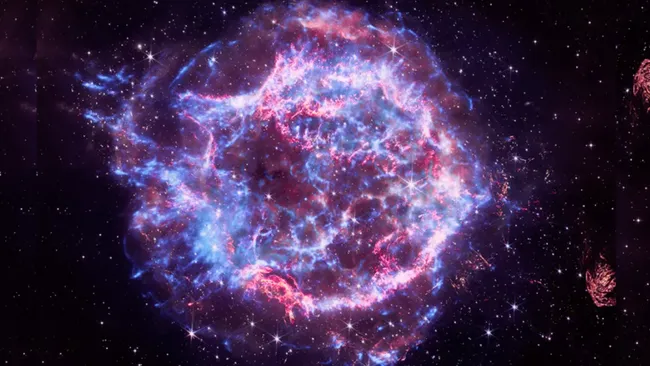
For decades, astronomers believed that the most massive stars in the universe ended their lives in super-charged explosions called hypernovas cosmic blasts ten times more powerful than a standard supernova.
However, a new study from researchers at University College London (UCL) suggests that hypernovas might not exist at all, and that ordinary supernovas are behind the mysterious space phenomena we see today.
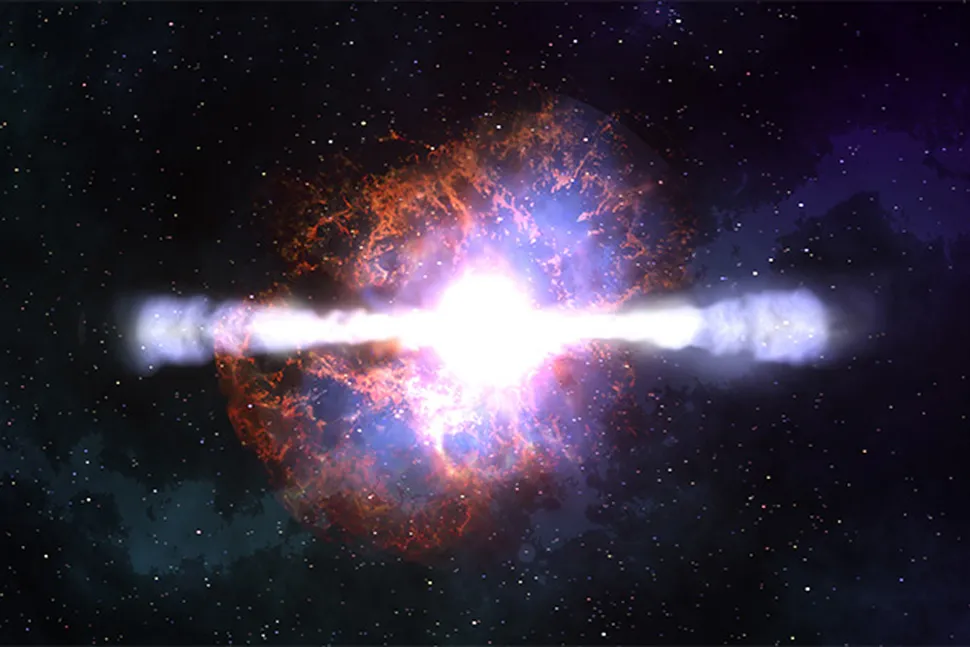
What’s the Difference Between a Supernova and a Hypernova?
- Supernova: When a massive star runs out of nuclear fuel at the end of its life, its core collapses. This triggers a massive shockwave that blows the star’s outer layers apart, scattering heavy elements across space.
- Hypernova (Theoretical): Thought to happen when an exceptionally massive, fast-spinning star dies, causing an explosion far more energetic than a standard supernova.
When stars explode, they scatter forged elements (like oxygen, sulfur, iron, and silver) into surrounding dust clouds. Over time, those element-rich clouds collapse to form the next generation of stars. By analyzing a star’s chemical “fingerprint,” scientists can trace its ancestry back to the explosion that created it.
The Clue: “Lumpy” Explosions, Not Massive Ones
Previously, when astronomers found stars with unusual chemical mixes, they assumed only an ultra-powerful hypernova could have created them. But the UCL team discovered a flaw in that assumption: supernovas don’t explode evenly in a perfect sphere.
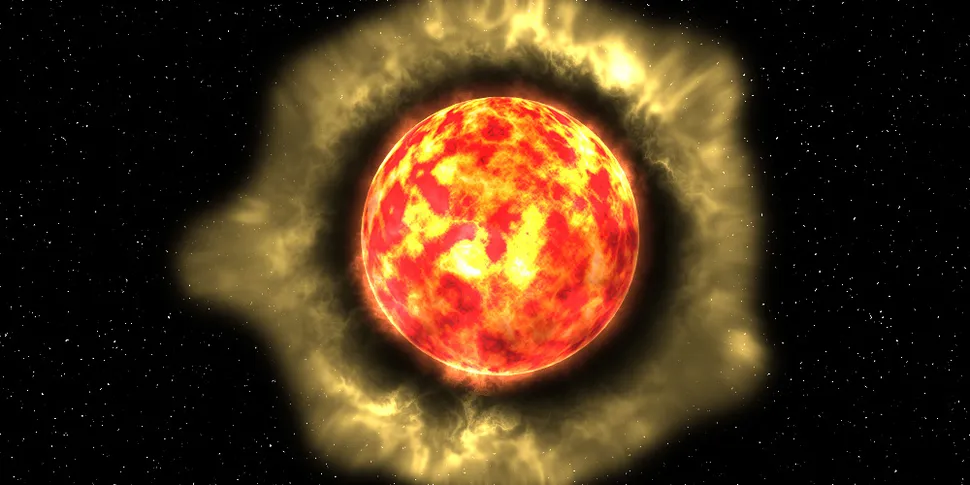
“If we look at a supernova today, the star’s materials are not spread evenly. Oxygen might predominantly fly in one direction, sulphur in another. New stars might form from a mix of pieces of the supernova, not its overall mix of elements.”
— Anmol Aggarwal, Team Leader at UCL
Before dying, a massive star builds layers like an onion—light elements on the outside, heavy elements at the core. When it explodes, it flings these layers out in messy, lopsided directions. By accounting for this uneven mixing, the team’s mathematical models proved that ordinary, asymmetrical supernovas can easily create these unique chemical footprints.
“All the evidence we see for hypernovae is suddenly gone.” — Anmol Aggarwal
Solving the Mystery of the Lonesome Red Giant
To test their theory, the scientists examined four stars previously believed to be spawned by hypernovas. They found that three of them were actually created by regular supernovas.
They then focused on a unique red giant star in the outskirts (halo) of the Milky Way that contained an unusually high amount of heavy elements like silver and uranium.
The findings revealed:
- The star didn’t originate in a hypernova.
- It wasn’t born purely from a neutron star collision either.
- Instead, it was likely formed in a small dwarf galaxy from a combination of a neutron star collision and an ordinary, lopsided supernova, before being captured by the gravity of our Milky Way.
The Takeaway
Space isn’t always about bigger and more violent explosions; sometimes, it’s just about how messy the explosions are. By realizing that supernovas throw out their elements unevenly, astronomers have solved a long-standing cosmic mystery—without needing hypernovas at all!